
The Biology Behind the Process
What Is Molting?
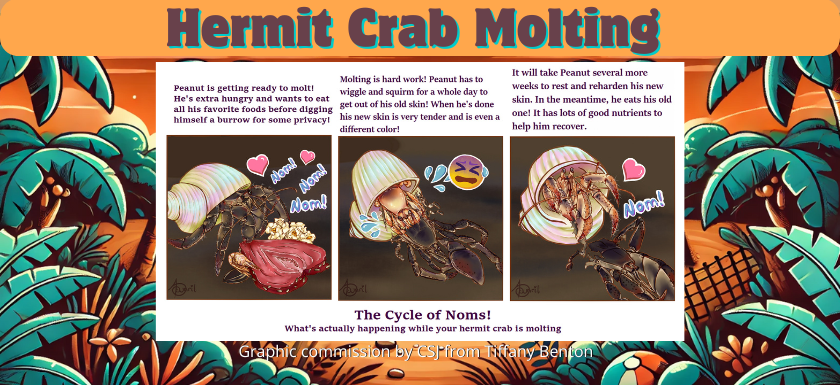
Molting (ecdysis) is the biological process by which a crustacean sheds its exoskeleton in order to grow. Land hermit crabs, like all arthropods, do not grow continuously. Their rigid outer shell must be replaced periodically with a larger one.
Molting is not a single event. It is a hormonally regulated, multi-stage physiological cycle involving the nervous system, endocrine system, epidermis, and internal tissues.
Understanding molting properly requires understanding the internal control system that drives it.
The Hormonal Control of Molting
Molting is regulated by a balance between inhibitory and stimulatory hormones.
The key components are:
- The eyestalk (X-organ–sinus gland complex)
- The Y-organ
- Ecdysteroids (molting hormones)
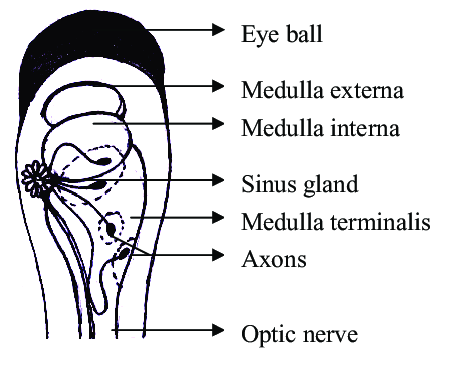
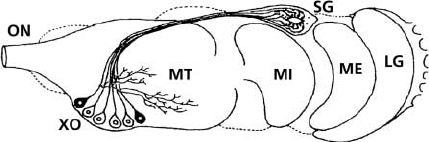
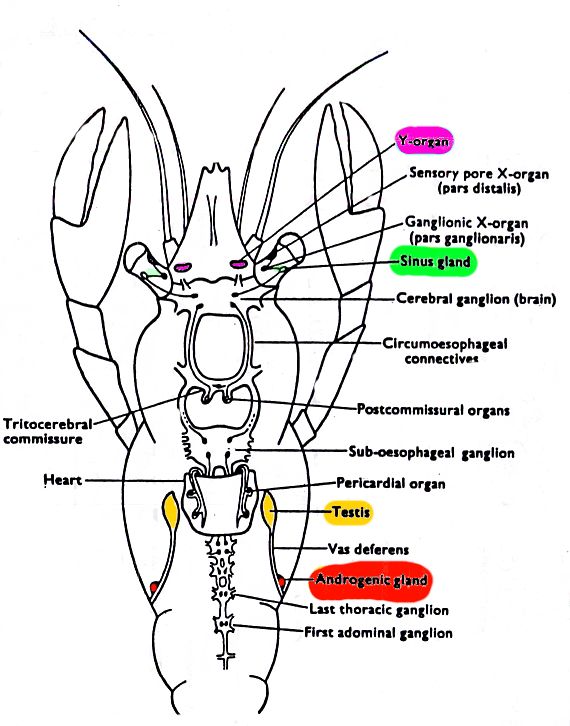
The X-organ–sinus gland complex in the eyestalk produces Molt-Inhibiting Hormone (MIH), which suppresses molting during the intermolt phase. The Y-organ produces ecdysteroids (molting hormones). When MIH levels drop, the Y-organ activates and initiates premolt.
In simple terms:
The eyestalk produces Molt-Inhibiting Hormone (MIH).
The Y-organ produces ecdysteroids (primarily ecdysone), which trigger molting.
When MIH levels are high, molting is suppressed.
When MIH levels drop, the Y-organ activates and releases molting hormones.
This shift begins the premolt stage.
Molting is therefore not triggered by mood, preference, or “deciding to molt.” It is a regulated endocrine event tied to growth, internal timing, and physiological condition.
The Molt Cycle: Stages
The crustacean molt cycle is divided into four major stages:
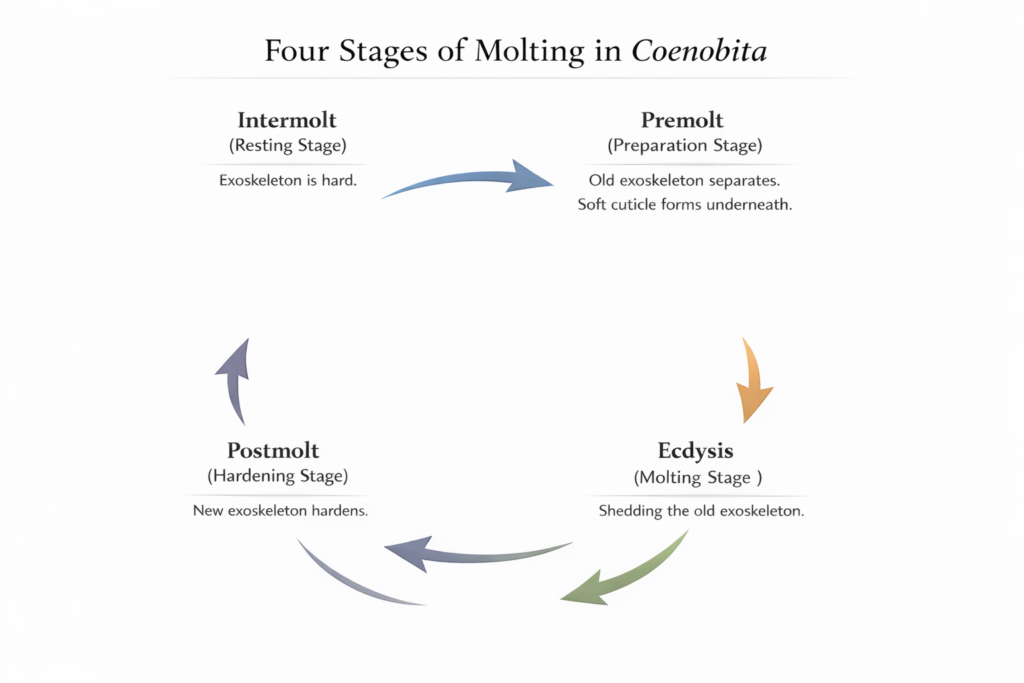
Intermolt – resting stage
Premolt – preparation stage
Ecdysis – active molting stage
Postmolt – hardening stage
Intermolt
This is the resting phase between molts. The exoskeleton is fully hardened. Growth of soft tissues may occur internally, but size does not visibly increase.
Premolt
Hormone levels shift. The old exoskeleton separates from the epidermis (a process called apolysis).
A new cuticle begins forming underneath the old one.
Calcium is withdrawn from the old exoskeleton and stored internally. In many land hermit crabs, this calcium may be visible later as calcium “sacs” inside the abdomen prior to molting.
Ecdysis
The crab splits and sheds the old exoskeleton. This is the shortest stage but the most vulnerable.
The new exoskeleton is soft and flexible.
Postmolt
The new exoskeleton expands using stored water.
Sclerotization (hardening and darkening) occurs.
Calcium is redeposited into the new shell.
Only after this stage is complete does the crab return safely to normal activity.
Why Land Hermit Crabs Molt Underground
For terrestrial hermit crabs (Coenobita species), molting typically occurs underground.
This provides:
• Stable humidity
• Physical protection
• Reduced risk of cannibalism
• Reduced desiccation during the soft-shell phase
During premolt, crabs dig because the physiology of molting requires environmental stability. This is not emotional behavior — it is a survival requirement tied to physical vulnerability.
A properly maintained substrate depth and moisture level directly affects molting success.
Energy and Nutritional Demands
Molting is metabolically expensive.
The crab must:
• Rebuild an entire exoskeleton
• Regenerate setae and surface structures
• Replace internal tissues
• Restore mineral stores
Protein is required for new cuticle formation.
Calcium is required for hardening.
Trace minerals support enzymatic activity.
If nutritional reserves are inadequate, molting may be delayed or unsuccessful.
This is one reason food quality based on biological needs is critical in captivity.
Surface Molts
Surface molts are uncommon but possible.
They are often associated with:
• Inadequate substrate depth
• Improper moisture gradient
• Environmental instability
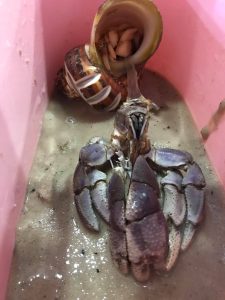
A surface molting crab is in a physically vulnerable state and must be protected from tank mates without unnecessary disturbance.
Surface molt Photo credit: Nuzio_Thanut_Phadungcharoen
What Molting Is Not
Molting is not:
• A stress response in the emotional sense
• A punishment for husbandry
• A random event
However, environmental instability can create physiological stressors that interfere with hormonal regulation and successful completion of the molt cycle.
Temperature, humidity, substrate condition, and nutrition directly influence outcomes.
Why Molting Duration Varies
Molting duration depends on:
• Size of the crab
• Species
• Environmental stability
• Nutritional reserves
Larger crabs require more time to regenerate and mineralize their exoskeleton.
The underground phase may last weeks to months depending on these variables.
The Key Takeaway for Keepers
Molting is a complex endocrine process governed by precise hormonal control.
Successful molting depends on:
• Deep, properly prepared substrate
• Stable humidity and temperature
• Adequate nutrition
• Minimal disturbance
Understanding the biology behind molting allows keepers to create conditions that support the crab’s natural physiological cycle rather than reacting to it with fear or interference.
References
Serrano, Laetitia & Grousset, Evelyse & Guy, Charmantier & Spanings-Pierrot, Céline. (2004). Occurrence of L- and D-Crustacean Hyperglycemic Hormone Isoforms in the Eyestalk X-Organ/Sinus Gland Complex During the Ontogeny of the Crayfish Astacus leptodactylus. The journal of histochemistry and cytochemistry : official journal of the Histochemistry Society. 52. 1129-40. 10.1369/jhc.4A6292.2004.
Reddy, Ramachandra & Reddy, Sreenivasula. (2012). Eyestalk hormones on molting and reproductionconcepts of Neuropeptide hormones in crab.
Molting is regulated through a balance between molt-inhibiting hormone and ecdysteroid production (Chang, Bruce, & Tamone, 1993).