Skip to content

Meta

  • Register
  • Log in
  • Entries feed
  • Comments feed
  • WordPress.org

Translate

The Crab Street Journal

Where hermit crab addicts go!

Primary Navigation Menu
Menu
  • Home
  • Shop for Hermit Crab Food
  • Hermit Crab Care
  • Hermit Crab Food Recipes
  • Hermit Crab Shells
  • Emergency Care for Pet Hermit Crabs: Handling Common Issues and Crises
  • Inside a Hermit Crab: Comprehensive Guide to Hermit Crab Anatomy
  • Hermit Crab Conservation and Advocacy: Protecting Their Future
  • Teacher’s Pet – Lesson Plans & Resources for Classrooms
  • Hermit Crab Downloadable Files
  • My account
  • Acceptable Use Policy
  • Contact Us
  • About Us
    • Linktree General
    • Linktree Community
    • Testimonials
    • Affiliate Disclosure
    • Media Kit
  • Land Hermit Crab Edu Center

hermit crab (Page 2)

Our movie debut! The Crab Street Journal featured in Girl Most Likely

2016-04-13
In: General

In 2011 The CrabStreet Journal was contacted about featuring our print magazine in a film tenatively titled Imogene. We granted permission of course! In 2013 the film was released as a major motion picture under the title Girl Most Likely featuring Kristin Wiig, Matt Dillon and Annette Benning. Krisin Wiig’s character has a brother who is a fellow hermit crab lover and in this seen he can be seen reading the lastest issue of The Crabstreet Journal. Below is a screenshot of our cameo. How exciting!!!Read More →

Emergency temporary housing for your hermit crabs

2016-02-10
In: Crabitat

Land hermit crabs require a properly set up crabitat to survive and thrive in captivity. Sometimes we may not be able to provide that right away or we need a temporary housing set up because we are moving to a new home or we are faced with evacuating our current home. Perhaps you just bought your first hermit crabs and have discovered that the Kritter Keeper you were sold is NOT a sufficient home but can’t afford or don’t have immediate access the proper supplies. In these circumstances you can set up a temporary crabitat. The MacGyver crabitat (ideal for emergency short term housing whenRead More →

Hermit Crab Legs: Pereiopods of Coenobita species

2015-09-27
In: General

In hermit crabs, the fourth and particularly the fifth pereopods are reduced, usually remaining within the confines of the gastropod shell and hence are not used for walking. These appendages do however becoming important when the hermit crab attempts to right itself, providing anchorage within the shell. Further, the fifth pereopod has become specialised as a gill cleaning appendage, often resting within the gill chamber (Bauer 1981). On the abdomen only the left pleopods are retained (Poore 2004).[1] Hermit crabs used specialized setae on the their maixillipedes and fifth pereiopods for most grooming but used the unmodified first, second, and third periopods as well. MostRead More →

Beneficial Foods for Hermit Crabs Containing Zeaxanthin

2015-09-19
In: Food and Nutrition

Written by Julia Crab (Kerie Campbell) Saturday, 19 November 2005 Zeaxanthin is an important precursor to astaxanthin, the carotenoid crustaceans need most to regulate their body systems. If astaxanthin is hard to come by, then zeaxanthin is the substance that coenobita need most. Beta carotene, while a valuable carotenoid, is not used as efficiently by crabs and is not of as much dietary use as zeaxanthin is. The following lists are of zeaxanthin-containing foods. There are three lists, one each for foods containing high, moderate, and low or trace amounts of this important substance. They are partial and will be updated as new information comesRead More →

Learning to prepare food for your hermit crabs

2015-09-19
In: Food and Nutrition

Written by Julia Crab (Kerie Campbell) 2005Coconuts: A Really Tough Nut to Crack Yeah, these guys are tricky to open. But the fresh meat and milk inside are crab ambrosia. The best method for opening them is to employ an adult human male. Barring access to one of those, note the three depressions at one end of the coconut. These are the coconut’s eyes. An icepick, a chisel, or a strong slot head screwdriver placed firmly in the center of one of the eyes, and bashed firmly and repeatedly by a hammer will eventually reward those with perseverance. A drill or jigsaw can also beRead More →

Foods Containing Carotenids for Hermit Crabs

2015-09-19
In: Food and Nutrition

Written by Julia Crab (Kerie Campbell) August 2005 This list contains beneficial foods for hermit crabs that are moderate to high in beta carotene apricotsbell pepper of any color, red being the highest in carotenidsblueberriesbroccolicantaloupecarrotchardcilantro (raw)collard greensdandelion greens (raw)fava beans in the pod (raw)grape leaves (raw)lettuce (dark varieties, not iceburg which is nutritionally empty)mangopapayaparsley (raw)passionfruitpeachespeaspersimmonpineapplepumpkin and squash, and seeds (dried)snap beans (raw)spinachspirulinaseaweeds and microalgaessweet potato Astaxanthin is another carotenid found in shrimp and krill and red seaweeds, that the crabs also use. Astaxanthin must be fed with a healthy fat/oil to be absorbed properly. Tannin is also a color booster. Dried oak or sycamore leaves,Read More →

Foods that will enhance your hermit crabs color

2015-09-19
In: Food and Nutrition

Written by Vanessa Pike Russell 2004 I have done some research on colour enhancing foods and figuring out how to get crabs a certain colour.If you want really dark brown colour hermit crabs then give them lots of foods rich in tannins such as Brown Oak Leaves, Brown Oak Bark (pesticide free). This comes from Carol of CrabWorks. Her hermit crabs have been eating this since they were itty bitty crabbies, 28+ years ago! https://www.fs.fed.us/wildflowers/ethnobotany/tannins.shtml If you want orange hues that foods such as carrots, marigold petals have been known to create an increase in orange colour. Foods rich in Astaxanthin are what you areRead More →

Adulterants & Additives in hermit crab food

2015-09-19
In: Food and Nutrition

Written by Julia Crab Monday, 01 August 2005 – this information has not been reviewed or updated but is maintained here for archival and reference purposes. What follows is a list of ingredients added to commercial and processed foods that may harm hermit crab health when fed. While I believe that these substances should be avoided, there is no actual scientific proof that these are harmful. This list is being compiled as a guide to dietary harm reduction. The key to good diet, in crabs, other pets, and people, is informed label reading. Anything enzyme modified *Anything fermented *Anything protein fortified *Ascorbyl PalmitateAutolyzed yeast *BarleyRead More →

Hermit Crab Surface Molt

2015-09-07
In: Caresheets, FAQ

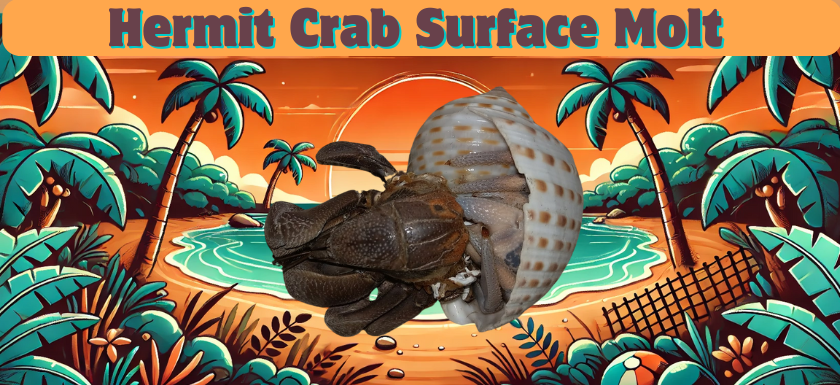
Hermit crabs typically go about their molting business below ground away from your prying eyes and nosey tank mates but this isn’t always the case. Sometimes you will find yourself with a surface molter on your hands. Surface molts can be very cool for you but additionally stressful for the crab. Let’s look at the best way to handle a surface molter. First do not touch or move the crab! Unless you feel you must to ensure it’s safety. Second find a way to securely isolate the crab from it’s tank mates. It is extremely important that your tank temperature and humidity are in theRead More →

Hermit Crab Sex Organs: Gonopores and Sex Tubes of the Coenobita species

2015-05-31
In: Biology

I am unsure about the set of spots on the legs after the gonopores. Hermit crabs can change gender during a molt so perhaps that is the location of where the male sex tubes would develop after a gender change? Just a theory…. Coenobita rugosus has been found to be intersexual  We are building image galleries of specific body parts. If you have high resolution, clear photos that you would like to donate to this project please upload your photos to Dropbox here: https://www.dropbox.com/request/ajUgzmoG7co86iH2X0fh Overview of the anatomy of a land hermit crab (Coenobita) References:Read More →

Going Natural Beginner’s List for Feeding Hermit Crabs

2015-04-07
In: Food and Nutrition

written by Julia Crab (Kerie Campbell) 2005 If you’ve decided to get rid of commercial diet completely, and go natural, here is a list of the recommended human-grade beginner foods. These are the highest in nutrition and will make a good base for adding fresh fruit, vegetables and meat too. When you are ready to expand your knowledge of hermit crab nutrition check out the Hermit Crab Feeding Guide. Add a couple of the following dried flowers or flower products: Add some dried fruit (unsweetened and free of sulfur dioxide or other additives): If there is still room for more purchases, here is the list IRead More →

Hermit Crab Thorax (Shield) – Coenobita species

2015-03-28
In: Biology

The Cephalic shield [1] or carapace is part of the exoskeleton that covers the cephalothorax. It functions as a protective cover, hence the common name ‘shield‘. We are building image galleries of specific body parts. If you have high resolution, clear photos that you would like to donate to this project please upload your photos to Dropbox here: https://www.dropbox.com/request/ajUgzmoG7co86iH2X0fh Overview of the anatomy of a land hermit crab (Coenobita) Photo credits:HUSO Chen Yu-Jung Stacy Griffith References:Read More →

Hermit Crab Antennae – Coenobita species

2015-03-15
In: Biology

Land hermit crabs have two pairs of antennae. The antennae are vital sensory organs that allow Coenobita to locate the ocean, their food and to explore their surroundings. Coenobita rely on humidity in the air to aid them in smelling and locating various odors. In Coenobita Violascens the antennal acicle is fused with second peduncular segment. To capture odors, crustaceans move their antennules back and forth through the water in a motion called flicking. We are building image galleries of specific body parts. If you have high resolution, clear photos that you would like to donate to this project please upload your photos to DropboxRead More →

Hermit Crab Pincers Claws – Chela or Cheliped of Coenobita species

2015-03-15
In: Biology

Chela (organ) A chela /kˈiːlə/, also named claw, nipper or pincer, is a pincer-like organ terminating certain limbs of some arthropods.[1] The name comes from Greek (χηλή) through New Latin (chela). The plural form is chelae.[2] Legs bearing a chela are called chelipeds.[3] Another name is claw because most chelae are curved and have a sharp point like a claw. Also called pincer or pincher. We are building image galleries of specific body parts. If you have high resolution, clear photos that you would like to donate to this project please upload your photos to Dropbox here: https://www.dropbox.com/request/ajUgzmoG7co86iH2X0fh Overview of the anatomy of a landRead More →

Hermit Crab Eyes – Coenobita species

2015-03-15
In: Biology

Coenobita possess compound eyes comprised of faceted lenses which are especially adept at picking up fine movements. The eyes are located on movable stalks and this is one of the primary ways we determine the species of hermit crab we are looking at.   We are building image galleries of specific body parts. If you have high resolution, clear photos that you would like to donate to this project please upload your photos to Dropbox here: https://www.dropbox.com/request/ajUgzmoG7co86iH2X0fh Overview of the anatomy of a land hermit crab (Coenobita) Photo Credits: The Crab Street Journal has been granted permission by these photographers to use their photo(s) onRead More →

Hermit Crab Gills – Coenobita species

2015-03-15
In: Biology

The gills of Coenobita and Birgus are modified for air-breathing but are reduced in number and size and have a comparatively small surface area. The branchiostegal lungs of Coenobita (which live in gastropod shells) are very small but are well vascularized and have a thin blood/gas barrier. Coenobita has developed a third respiratory organ, the abdominal lung, that is formed from highly vascularized patches of very thin and intensely-folded dorsal integument. Oxygenated blood from this respiratory surface is returned to the pericardial sinus via the gills (in parallel to the branchiostegal circulation). Birgus, which does not inhabit a gastropod shell, has developed a highly complexRead More →

Hermit Crab Molt Sac – Coenobita species

2015-03-15
In: Biology

The land hermit crab (Coenobita) develops a water sac inside of their shell prior to a molt. As shedding of the old exoskeleton begins, this store of water is used to expand the body to stretch and increase size before the soft exoskeleton begins to harden again We are building image galleries of specific body parts. If you have high resolution, clear photos that you would like to donate to this project please upload your photos to Dropbox here: https://www.dropbox.com/request/ajUgzmoG7co86iH2X0fh Overview of the anatomy of a land hermit crab (Coenobita)Read More →

Hermit Crab Mouth (mandibles and maxillipeds) – Coenobita species

2015-03-15
In: Biology

The mandible (from Latin: mandibula or mandĭbŭ-lum, a jaw) [1] of an arthropod is a pair of mouthparts used for either for biting, cutting and holding food. The last three cephalic segments, together with the three most anterior thoracic segments (all of the cephalothorax), house the external mouthparts. From anterior to posterior these are the mandibles, maxillules, maxillae and then the three pairs of thoracic maxillipeds. These are all biramous except for the mandibles and maxillules. [2] Mandibles are often simply referred to as jaws. Maxillipeds are appendages modified to function as mouthparts.  Hermit crabs are often seen grooming their eyes with their maxillipeds muchRead More →

Hermit Crab Carrying Eggs (gravid) – Coenobita species

2015-03-15
In: Biology

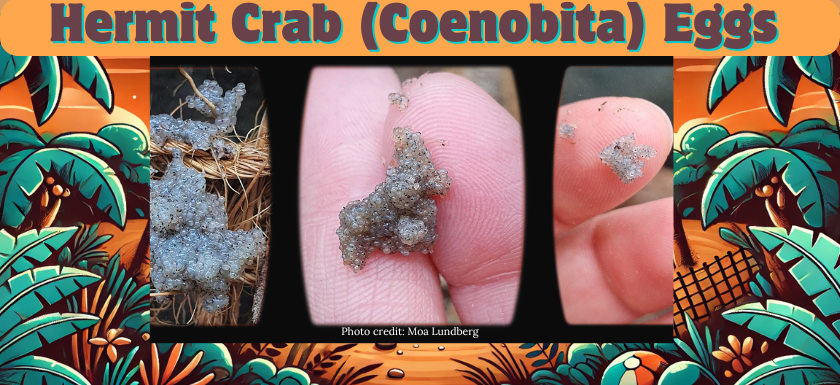
grav·id: ˈɡravid/ adjective 1. pregnant; carrying eggs or young. Land hermit crabs carry their brood inside of the shell until they are ready to be released into the ocean. We are building image galleries of specific body parts. If you have high resolution, clear photos that you would like to donate to this project please upload your photos to Dropbox here: https://www.dropbox.com/request/ajUgzmoG7co86iH2X0fh Overview of the anatomy of a land hermit crab (Coenobita)Read More →

Hermit Crab Abdominal Appendages – Coenobita species

2015-03-15
In: Biology

Hermit crabs in the Coenobita family are Decapods which means they have 10 legs, limbs or appendages. The abdominal appendages of the land hermit crab include the thoracic appendages, pleopods, uropods and telson [1].The thoracic appendages are used for cleaning the gills, gripping the shell, gripping a mate during copulation. The pleopods are used for brooding eggs. At the end of the pleon is the tail fan, comprising a pair of biramous uropods and the telson, which bears the anus. Together, they are used for steering while swimming, and in the caridoid escape reaction. We are building image galleries of specific body parts. If youRead More →

So you want to buy a hermit crab?

2015-03-08
In: General

Written by Stacy Griffith and originally published on All Things Crabby.com Now that you’ve decided that a hermit crab is the pet for you, it’s time to make sure you are right for a hermit crab. If you know as much about hermit crabs as I did when I first purchased one, you are going to appreciate this information. I will cover the basics for setting up a crabitat (a cute name for your hermit crabs habitat). So BEFORE you run off to the pet store and pick out your new pets, print the shopping list at the bottom of the article and take it toRead More →

FAQ Are Ladybugs Safe for Hermit Crabs?

2015-02-16
In: Crabitat, FAQ

Question:Craboza asked:I want them to eat the bad things.Will they eat aphids and other bad bugs in there?Or anything that is not the crabs?I want them to keep all possible parasites out. If I can use ladybugs, how many can I put in? Where do I get them? Thank you.   Answer:Bugboy (aka King Arthur-Pod) answered:Don’t…..lady bugs are toxic, that’s the reason for the orange and black coloring.If one should die and the crabs eat it, could be harmful.Put one on the tip of your tongue, you’ll know how nasty they really are (OK so I’m an entomologist and only we do crazy stuff likeRead More →

Simple Hermit Crab Food Recipes

2015-02-16
In: Food and Nutrition

These recipes were created by hermit crab foodie Kerie Campbell aka Julia Crab in 2005. There are endless food ideas but these may help get you started. We have more hermit crab food recipes submitted by others. Be sure to visit our Hermit Crab Feeding Guide to ensure you are using only safe ingredients. Fruity Fish & Flowers II dried calendula (about 2 tsp.)dried chamomile (about 1 tsp.)coconut chunklarge papaya chunkpink flame rose bud Kibble and place in the serving dish. Air-pop about 1 Tbl. amaranthshred some dulse1 Tbl. Flott tuna1 tsp rolled oatslarge pinch dandelion rootlarge pinch dried dandelion leaf. Kibble and place onRead More →

Making use of all the space in your hermit crab tank (Crabitat)

2015-02-16
In: Crabitat

Hermit crabs are tree climbers by nature so maximizing all the vertical space in your tank will provide them with a more enriching and stimulating environment. Making use of all four walls of the tank will give your hermit crabs more room to roam and explore. Also if you use overhead lights you can provide your hermit crabs a way to get closer to the lights and warm themselves as needed. You can get very creative in making second levels with a variety of materials. Just be sure the materials are safe before placing them in your tank. Avoid metal that can rust, paint thatRead More →

How to Accurately Determine Your Hermit Crab’s Size

2014-03-03
In: Crabitat, FAQ

What’s a micro hermit crab? What’s a jumbo hermit crab? Size can be subjective and hard to define but we are trying anyway!  Our friends in Indonesia have developed two more realistic size charts based on leg length or leg span. Indonesia is home to many of different species including the large C. brevimanus. With much more data to work with the group created these new sizing charts which are more accurate. (Mary Akers, Hermit House raised this adorable, nearly microscopic, captive bred baby hermit crab.) Why does size matter? When determining how much space is needed per hermit crab we need to know howRead More →

How do I clean my hermit crab tank (crabitat)?

2014-02-22
In: Crabitat

A total tank tear down for cleaning is no longer considered necessary. If set up properly from the beginning your tank will become bioactive over time and can be kept up with minimal effort. The information below can be applied when purchasing used items that you wish to clean before set up or if you have an emergency (flood, bacteria, insect invasion) situation and need to do a tear down to deal with it. When adopting hermit crabs you may also receive their tank. It is a good idea to fully santize the tank and all the decor items. Throw away the substrate and startRead More →

FAQ Why can’t I just use tap water?

2014-02-18
In: FAQ

All water that comes in contact with your hermit crab must be dechlorinated. Most cities add chlorine to their water supply. Some add chlorine and chloramines to the water. Unless you have contacted your water department and determined if they use both, you should use a treatment to remove both. In the past, it was enough to let water sit out for 24 hours so the chlorine could evaporate out. That no longer is sufficient because chloramines will never evaporate out nor ammonia. A bottle of water treatment will last for years. Distilled water is not recommended as it is devoid of beneficial minerals. StresscoatRead More →

Hermit Crab Emergency Help

2014-02-18
In: Caresheets, Services

We are sorry that you are experiencing a hermit crab care emergency. Below are some links and information to our most commonly experienced emergency situations. Aggressive hermit crab I purchased new hermit crabs: PPS (Post Purchase Stress) Limb loss Mites or pests within crabitat Is my Hermit crab dead or molting? My hermit crab has left it’s shell and is naked Caring for hermit crabs with limb loss or other deformities After reading these items if you still need some help, please visit the Land Hermit Crab Owners Society Facebook Group.Read More →

PPDS (Post Purchase Death Syndrome) Minimizing the Impact

2013-02-21
In: Biology

Please note: We’ve updated our language and PPS is now called PPDS – Post Purchase Death Syndrome as this is a more accurate name. written by Sue Latell March 8, 2006 I have belonged to the on-line crabbing community for a little over 3 years now. From day one there was discussion about the number of deaths immediately occurring after purchase. It evolved into a named syndrome: PPDS. Many “unexplainable” deaths that occurred in the time-frame from newly acquired to first post molt death were labeled PPS. Time lines wavered (anywhere from one week-up to one year), and alarmingly glossed over (in my opinion) tooRead More →

How Old Is My Hermit Crab?

2013-02-21
In: Biology

written by Vanessa Pike-Russell ‘How old’ is an oft asked question and hard to answer. Lifespan is similar. They both depend on many factors such as diet, exercise, moulting frequency, pecking order, species and availability of seashells. In this article, I will touch on a few of the factors, and finish with some hints on how to get a rough estimate of the size and age of your hermit crab. A big ‘thank you’ to Carol of CrabWorks for her permission to use her wonderful photographs, and for being such an inspiration to us all! How fast a hermit crab grows usually depends on whatRead More →

What is the life-cycle of a land Hermit Crab?

2013-02-21
In: Biology

written by Vanessa Pike- Russell 2000, updated by Stacy Griffith The life cycle of the land hermit crab is unique. It starts by the release of eggs into an ocean tide pool, where the zoea go through a series of moults and developmental stages. A baby hermit crab zoea will be a part of plankton until it grows and starts to resemble hermit crab form. Once they have developed to maturity, hermit crabs leave their watery home, making the long journey to land to find a shell for the protection of the soft abdomen. Once ashore, land hermit crabs go through a metamorphosis, developing modifiedRead More →

Keeping and Breeding Hermit Crabs by Stu Wools-Cobb

2013-02-21
In: Biology

  This article is in PDF format, please click the link to view it.  Read More →

Regulation of Crustacean Molting: A Multi-Hormonal System

2013-02-21
In: Biology

The molting cycle in crustacean is controlled by hormones. Below is a snippet from a study on crustacean molting that explains the role of hormones in the molting cycle. Land hermit crabs continue to molt their entire life unlike some other crustaceans. ERNEST S . CHANGM, ARILYN J. BRUCEA, ND SHERRY L. TAMONEBodega Marine Laboratory, University of California, P.O. Box 247, Bodega Bay, California 94923 SYNOPSISIn order to increase in size, arthropods must first molt (shed) their confining exoskeleton. This molting process is under the immediate control of the steroid molting hormone 20-hydroxyecdysone (20-HE). Read the full article More articles on molting:What is moltingIs myRead More →

Anatomy of Land Hermit Crabs

2013-02-21
In: Biology

Overview of the anatomy of a land hermit crab (Coenobita): We are building image galleries of specific body parts. If you have high resolution, clear photos that you would like to donate to this project please contact us via email: crabstreetjournal at gmail dot com Click to be taken to the gallery:Chelipeds or pincersEyesAntenna (antennal flagellum, antennular flagellum, antennule)Mandibles and MaxipellidGills and branchial chamberAbdomen, Uropods, Pleopods, TelsonWater or molt sacEgg clusterGonoporesShieldRead More →

Hermit Crab Zoea

2013-02-21
In: Biology

Read More →

Post Purchase Death Reduction Method

2013-02-21
In: Biology, Caresheets

This is a (hopefully) more simplified revision of the original.  I have also created a printable calendar for tracking that is free to download. Introduction: The objective of this method is to reduce the impact of physical stress by keeping the hermit crab above ground eating well and exposed to light. Both are vital to the hermit crab’s ability to recover. This is a thirty day method. While this can be accomplished in three weeks, there is no reason to rush. If you are adding new (wild caught) hermit crabs to your existing colony it is important that you do not introduce sick or contagiousRead More →

Comparative Example for PPDS Practices

2013-02-21
In: Biology, Caresheets, General

written by Sue Latel March 8, 2006 Little Billy has had 3 hermit crabs since his 12 birthday. He has a 20 gallon tank housing his 3 small PP crabs. One day when he is at the store picking up some ocean salt water for his crabs, he spots a tank containing 2 poor little Ruggies that have no water except for a damp sponge, huge pellets of food that he doubts they have even attempted to eat, and no ground cover to protect them from the 100 watt heat lamp that is shining directly on them from an open tank top. Billy has been aRead More →

The Caribbean Terrestrial Hermit Crab Coenobita Clypeatus (Herbst, 1791)

2013-02-21
In: Biology

Exact text of the original paper by Herbst: The name Coenobita Clypeatus (usually pronounced seen-oh-bit-a cly-pe-ait-us) may be translated as “shield-bearing monk or cloister brother,” which conjures up a truer image of this often gregarious and variously cloistered resident of tropical East American shores than does “hermit crab.” But, like most common names, “hermit crab” or “soldier crab” in native parlance, will certainly endure. The animal so called belongs to a small family of terrestrial decapod crustaceans quite distinct from the marine hermit crabs. The family Coenobitidas is composed of two genera: Birgus and Coenobita. Birgus is represented by a single species, Birgus latro (Linnaeus,Read More →

Mites: Friend or Foe? The Happy Tale of the Hypoaspis Mites

2013-02-21
In: Crabitat, General

written by Kerie Campbell 2005 Two months ago, during deep clean, I took my largest compressus,Houdini, out of the tank, turned him over to have a look, and a red…thing fell out of his shell. I couldn’t believe it! Mites!Huge, red mites. Houdini had a few, Fifi had some, and poor Ghidra,a pre-molt rugosus, was covered with them. I was appalled. I inspect new crabs when I get them for mites, and have never seen any. The only explanation I have is that these mites, being a bright red color, must have snuck in on some of the perlatus – they are the same colorRead More →

Growth of Fungus

2013-02-21
In: Biology, General

written by Jennifer Borgesen The fungi:  how they grow and their effects on human health. (includes related article on documentation of fungal exposure and disease relationship) Date: 07-01-1997; Publication: Heating, Piping, Air Conditioning; Author: Burge, Harriet A. Shape and structure of fungi “The fungal cell is similar to that. of plants and animals, containing all of the same organelles (nucleus, mitochondria, ribosomes, membrane systems, etc.). Like plants, the fungal cell is bounded by a rigid cell wall. However, while plant cell walls contain cellulose as the basic structural material, fungal cell walls contain a material that is similar to that in insect exoskeletons (chitin). MostRead More →

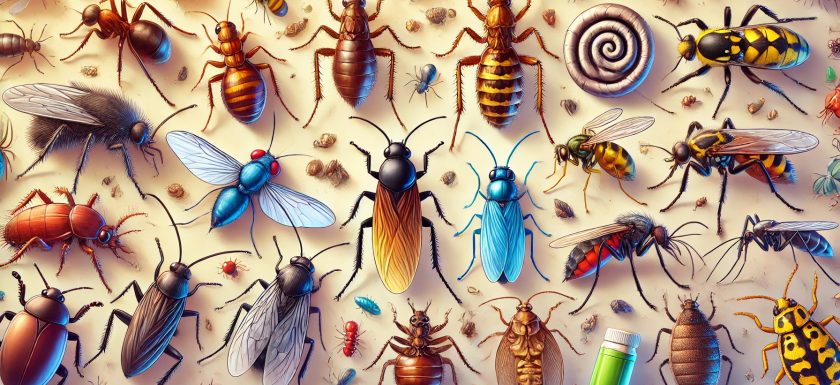
Guide to bugs you might find in your crabitat

2013-02-21
In: General

originally written by Jedediah and updated by Stacy Griffith It is impossible to completely rid your home of insects. https://www.wired.com/2016/01/just-give-up-its-impossible-to-bug-proof-your-home Tip: Need to identify a bug? Place it in a cup of water so you can take a clear photo of it or use a magnifying glass to inspect it. Insects Insects have six legs and three body parts that are usually clearly visible, the head, the thorax (the breast) and the abdomen. Most of them have wings, although those might not be clearly visible, some insects can hide them in a sort of pouch on their back (like earwigs) and some insects have noRead More →

Re-Educate before Rescue

2013-02-21
In: General

written by Vanessa Pike-Russell Re-Educate before Rescue! Vanessa Pike-Russell on the importance of educating petstores about proper hermit crab careI understand that it is difficult to ignore hermit crabs in bad conditions. By buying them from pet stores you are are saving some from the bad conditions, however unless they stop selling hermit crabs altogether it is feeding the cycle. (Repeat) If you rescue hermit crabs from a pet store with bad conditions then you are supporting a pet store that is doing the wrong thing, and only encouraging them to buy more hermit crabs since there are no negatives about the way they careRead More →

Calibrating your Humidity Gauge

2013-02-21
In: Crabitat

written by Rai Ahmes Relative humidity (RH) is measured as a percentage–absolute and specific humidity are NOT. If it reads in % it’s a relative gauge. RH gauges are fairly inexpensive and commonly available. Gauges measuring absolute or specific humidity are hard to find and expensive; they also read in either g/kg or g/cubic meter (or the non-metric equivalent) not %. “Actual humidity” and “exact humidity” are not measurements. Dial RH gauges are rarely calibrated properly by the time they reach your home. This is NOT the fault of the manufacturer. It is simply the way it is with this type of hygrometer whether it’sRead More →

On 3D Printed Hermit Crab Shells: An Interview with Amy Youngs

2013-02-21
In: General

written by Vanessa Pike-Russell Recently we interviewed Amy Youngs, a young artist who has “collaborated with another artist, Matt Derksen, to design shells using 3D modelling programs.” http://accad.osu.edu/~ayoungs/prototypes.html Vanessa: What prompted you to create prototypes of hermit crab seashells Amy: I am very interested in the ways that technology interfaces with the natural world and I when I was given the opportunity to work with the new technology of rapid prototyping, I really wanted to make something that would connect with my interest in living things. I remembered owning a hermit crab and I knew that they switched shells and I had been curious aboutRead More →

Say NO to Painted Shells… Picallo’s story

2013-02-21
In: General, Painted Shells

Our treatment of animals will someday be considered barbarous. There cannot be perfect civilization until man realizes that the right of every living creature are as sacred as his own – Dr. David Starr Jordan and now, on with the show… Crab in a cup anyone? First a bit o’ the story. I went to the pet store, the one that I LIKE, and they always have good patties, in natural shells, none of the painted. So I wander to the hermit crab tank and in the aquarium is about 16 crabs in cups, stacked on top of each other. all in red or pinkRead More →

The importance of the right kind of salt

2013-02-21
In: FAQ, Food and Nutrition, General

written by Jennifer Nielsen The existence of an ocean water dish is a source of great controversy in the world of hermit crab owners. Why the importance of this type of water is rarely debated, it seems that the products used in the creation of Ocean Water are the source of much debate. Just as all hermit crab owners know not to use table salt for their crabs, there are two types of salt available for aquarium use. Fresh Saltwater as well as Ocean Water Salt, which although made of the same components have vastly different role within the world of fish keeping. A saltwaterRead More →

Choosing a pet hermit crab

2012-11-03
In: General

Originally written by Vanessa Pike-Russell Look closely at the hermit crab environment and ask questions about the food, bedding, housing and temperature needs for your new pets. If you have never owned hermit crabs before a book on caring for hermit crabs is a wonderful resource. There is a list of hermit crab guides listed under Books in Product Reviews. Make sure that you can purchase extra shells from the shop or alternatively from a seashell shop, craft store or tourist shop. When I am selecting a crab I will ask permission to pick up and handle the hermit crabs. Slowly and gently pick upRead More →

Chirping or Croaking

2012-11-03
In: Biology

Originally written by Vanessa Pike-Russell, updated 2018 by Stacy Griffith If you have heard it, you would think that it sounds like something between a frog croak’s, a chicken’s clucking and something else thrown in for good measure. “The land hermit crab sometimes communicates by a whirring-chirping sound, though not too often. These noises usually have been heard during aggressive encounters in the crabs’ natural environment and are seldom heard in captivity. The only behavior observed that may resemble aggression has been when one crab shakes or rocks another to drive him from a shell the aggressor wants. Even in this act neither crab isRead More →

Are you ready for a land hermit crab?

2012-10-16
In: Crabitat, General

Written by Vanessa Pike-Russell Hermit crabs are advertised as cheap and easy to maintain, which is not necessarily true. To keep your hermit crabs happy and healthy, you will need to provide a lot more than food and water. In this article we will give you a list of essential and optional items you need. Also you will find some info on basic care and upkeep of the tank, considerations when purchasing. 1. ESSENTIALS Glass tank with lid: A glass tank is preferred over plastic tanks, which will scratch and will not be able to hold the humidity within the ventilated lids. A glass lidRead More →

FAQ A Close Look At Salt Products

2012-10-16
In: FAQ, Food and Nutrition

Hermit crab enthusiast Jennifer Nielsen compares several brands of sea salt mix in this article.Written by Jennifer Nielsen (aka redjln) While many hermit crab owners realize the importance of providing Ocean Water to their pets, there is a question over which type and which specific product is the best. To answer this, I got Instant Ocean and Reef Crystals enriched blend by Aquarium Systems, Doc Wellfish’s Aquarium Salt, and Aquarium Salt by Jungle. I have gotten a container of Distilled Water to test the products in. Now, I will disclaim right now that I do not have access to a laboratory of equipment. All IRead More →

Posts pagination

Previous 1 2 3 Next

Site Pages

  • 404 Page Not Found
  • Acceptable Use Policy
  • Contest Rules
    • CSJ Birthday Giveaway
    • Hermit Crab Pumpkin (Crab O’Lantern) Decorating Contest
    • It’s the Great Pumpkin, Hermit Crab!
  • Emergency Care for Pet Hermit Crabs: Handling Common Issues and Crises
  • Hermit Crab Care
  • Hermit Crab Coloring Pages
  • Hermit Crab Conservation and Advocacy: Protecting Their Future
  • Hermit Crab Downloadable Files
  • Hermit Crab Food Recipes
  • Hermit Crab Shells
  • Home
  • How to Help Hermit Crabs: Conservation and Advocacy Ideas
  • https://crabstreetjournal.org/store/
  • Inside a Hermit Crab: Comprehensive Guide to Hermit Crab Anatomy
  • My account
  • Newbies Guide to Hermit Crabs
  • Recipe Book for Hermit Crabs
  • Safe Foods for Hermit Crabs – Searchable List & Database
  • Teacher’s Pet
  • Testimonials
  • The Importance of Returning Seashells to Beaches for Wild Hermit Crab Conservation
  • What’s New at Crab Street Journal
  • Where Hermit Crab Addicts Go!
  • Why you shouldn’t buy a hermit crab on vacation

Print and Download Categories

  • Educational
  • Games & Puzzles
  • Hermit Crab Care Guides
    • Hermit Crab Care Guides Translated
  • Printables
    • Coloring Pages
  • References

Blog Categories

Cite CSJ as a Source

To cite this page as a source copy the text below and insert the unique url for each page you wish to cite.

Griffith, Stacy. Crab Street Journal. CrabStreetJournal.org, [URL] Accessed [DATE].

A source citation is not the same as obtaining permission for use under our Acceptable Use Policy.

The CSJ Online Shop has Moved!

Same CSJ Market New URL: https://crabstreetjournal.org/market

Visit the new shop

Meta

  • Register
  • Log in
  • Entries feed
  • Comments feed
  • WordPress.org

Other Hermit Crab Websites

Land Hermit Crab Species
Stacy's hermit crab blog
Breeding Hermit Crabs
Crab Central Station
Purchase captive-bred land hermit crabs
Milo K Hermit Crab

Did you find my content helpful?

Consider buying my book! Everything from the website and so much more is covered in my book The Complete Guide to Land Hermit Crabs and Their Care: Changing the Mindset of Crab Keeping

Buy a signed copy today!

2001 - 2025© Crab Street Journal. All Rights Reserved. All content on this website, including but not limited to text, images, graphics, logos, videos, and digital downloads, is the property of Crab Street Journal or its respective content creators and is protected by copyright and intellectual property laws. Unauthorized reproduction, distribution, modification, or commercial use of any material without prior written permission is strictly prohibited. Certain trademarks, logos, and intellectual property featured on this site may belong to third parties and are used with permission. Any such materials remain the property of their respective owners. For permission requests or inquiries regarding content usage, please see our Acceptable Use Policy.